Why Is Lone Worker Training Important for Employers?
If you employ people who work alone, whether that's a support worker visiting clients at home, a security guard on a night shift, or a nurse doing community rounds, you've probably already thought about the risks. But thinking about them isn't the same as preparing for them. That's really where lone worker training comes in. It's not a box-ticking exercise, it's what stands between a staff member handling a tense situation calmly and that same person getting hurt with nobody around to help. Let's go through why this actually matters, and what employers should be asking themselves.
What Happens When Staff Are Left to Figure It Out Alone?
Picture a care worker walking into a client's home for the first time. There's no colleague standing next to them, no manager down the hall, just them and whatever situation unfolds. Without proper lone worker training, staff are left guessing how to read a room, when to leave, and how to de-escalate if someone becomes agitated. That guesswork is exactly what gets people hurt. Training gives staff a framework, something to fall back on instead of instinct alone, when instinct might freeze up under pressure.

Is Trauma Actually Being Considered, or Just Assumed?
Here's something a lot of employers miss. Many of the people your lone workers interact with, whether clients, patients, or members of the public, are carrying some kind of trauma. Aggressive or unpredictable behaviour often isn't random, it's a response shaped by past experience. This is why trauma informed care matters so much alongside safety training. When staff understand that a person's reaction might be rooted in fear or past harm rather than pure hostility, they respond differently, and often more effectively. Trauma informed care isn't about excusing dangerous behaviour, it's about understanding it enough to de-escalate it before things get physical.
Do Your Staff Know How to Handle a Situation That's Turning Physical?
Sometimes de-escalation isn't enough, and a situation edges toward physical risk. This is where positive handling training becomes essential rather than optional. It teaches staff how to manage a person's behaviour safely, using the least restrictive approach possible, without causing harm to either party. Without this kind of preparation, a worker's natural reaction under stress might actually make things worse, not better. Positive handling training gives staff calm, practiced responses instead of panicked ones, and that difference matters enormously in the moment it counts.
What Does Proper PMVA Training Actually Cover?
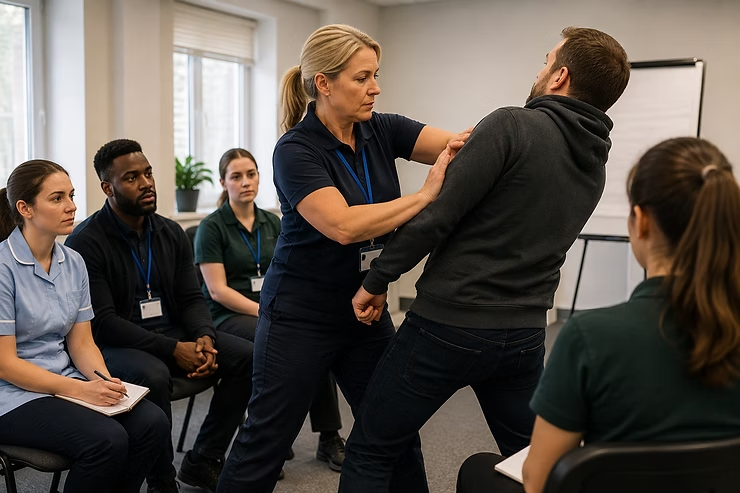
PMVA training, which stands for Prevention and Management of Violence and Aggression, pulls a lot of this together into one structured course. It's worth breaking down what good PMVA training should actually include, rather than assuming it's all the same:
Recognising early warning signs before a situation escalates
Verbal de-escalation techniques that reduce tension rather than increase it
Breakaway techniques for getting safely out of a dangerous hold or grab
Safe, low-risk physical intervention when there's genuinely no other option
Post-incident reporting and reflection, so lessons actually get learned
A course that skips any of these isn't really preparing staff for the full picture. PMVA training done properly gives lone workers a complete toolkit, not just a partial one.
Are You Meeting Your Legal Responsibility, or Just Hoping For the Best?
Under the Health and Safety at Work Act 1974, employers have a legal duty to protect staff, and that includes carrying out risk assessments and providing adequate training for anyone working without direct supervision. This isn't optional guidance, it's a legal requirement. If an incident happens and there's no record of proper lone worker training, no policy in place, and no evidence that risks were assessed, employers can face real consequences, both financially and reputationally. Beyond the legal side, there's simply the basic responsibility of not sending someone into a potentially difficult situation unprepared.
Does Training Actually Change How Confident Staff Feel?
This part gets overlooked a lot. Confidence isn't just a nice bonus, it directly affects how safely someone handles a tense moment. A worker who's been through proper training, covering everything from trauma informed care to positive handling training, walks into difficult situations with a plan rather than blind hope. That confidence often prevents things from escalating in the first place, because people who feel prepared tend to project calm, and calm tends to be contagious. Staff who feel abandoned or under-trained, on the other hand, are more likely to freeze, overreact, or avoid necessary situations altogether, which isn't good for anyone.
How Often Should This Training Actually Be Refreshed?
Skills fade if they're not practiced. A course completed two years ago doesn't mean much if nobody's revisited it since. Regular refreshers keep techniques sharp and give staff a chance to talk through real situations they've faced since the last session. Ongoing training also lets employers update the approach as roles or risks change, rather than relying on outdated methods that no longer fit the actual work being done.
Final Thoughts
Lone worker training isn't something to sort out after an incident happens, it needs to be in place before staff are ever sent out alone. From trauma informed care to positive handling training and full PMVA training, each piece plays a part in keeping people safe and confident in situations that can turn unpredictable fast. Goodsense Training works with employers who take this seriously, building training around the actual settings their staff operate in, rather than offering something generic. Whatever sector you're in, if your team includes lone workers, it's worth asking honestly whether they're truly prepared, or just hoping nothing goes wrong.


Comments